


It's proper springtime now and the birds are starting to sing more and more, and with International Dawn Chorus day coming up next Sunday (7th May) it seems like as good a time as any to begin this conversation about blackbirds and their own oral traditions. I don't claim to be any kind of expert on birds, none of my preparation to talk about this has been in any way scientific, it's simply been a case of living in the same place for 10 years, observing what is happening in the garden and having a fairly decent ear for a tune.
So it's time for a little background. When we moved to our house in a village just outside Oxford 10 years ago, one of the first thing we noticed was the birds. It was the first time we had such a big garden that backs on to proper countryside and the noise they made in the morning was a good deal more than we were used to, even at this time of year they begin to sing at 5am and normally the first to sing their tune is the blackbird. Now, blackbirds are quite common and one of the reasons I'm focussing on them is that they sort of speak the same musical language as us. By that I mean that the pitch of their song is in the same kind of range as our own music and the speed at which they sing their songs is also a fairly similar tempo as our own. Some birds sing so unbelievably fast that humans can only really understand what's going on if they slow recordings down and others have two separate voiceboxes which sing totally different tunes in different time signatures, and the blackbirds sound more melodic to my ear. Don't get me started on nightingales ... there are so many folk songs which praise the nightingale's singing as something heavenly ... to me, they sound like someone playing hardcore-Euro-trance in a bush!
Sadly the next year that tune did not come back. We actually really missed it. However, with my ears now tuned in to the blackbird melodies, new ones began popping up all over the place.
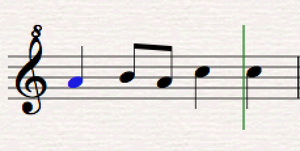
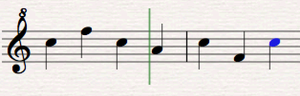
So it's time for a little background. When we moved to our house in a village just outside Oxford 10 years ago, one of the first thing we noticed was the birds. It was the first time we had such a big garden that backs on to proper countryside and the noise they made in the morning was a good deal more than we were used to, even at this time of year they begin to sing at 5am and normally the first to sing their tune is the blackbird. Now, blackbirds are quite common and one of the reasons I'm focussing on them is that they sort of speak the same musical language as us. By that I mean that the pitch of their song is in the same kind of range as our own music and the speed at which they sing their songs is also a fairly similar tempo as our own. Some birds sing so unbelievably fast that humans can only really understand what's going on if they slow recordings down and others have two separate voiceboxes which sing totally different tunes in different time signatures, and the blackbirds sound more melodic to my ear. Don't get me started on nightingales ... there are so many folk songs which praise the nightingale's singing as something heavenly ... to me, they sound like someone playing hardcore-Euro-trance in a bush!
 Shortly after moving in we began to recognise a tune or motif which our resident blackbird seemed to return to time and again that year (see above), it was nice to recognise it and we even used to sing it to eachother. The next year when the birds began singing again it was brilliant to hear the same little tune popping up, but this time the tune was being sung two gardens away on the other side. So just from that one tune we could tell that our particular blackbird had moved house!
Sadly the next year that tune did not come back. We actually really missed it. However, with my ears now tuned in to the blackbird melodies, new ones began popping up all over the place.
